If you buy or specify security gates for a living, you learn quickly that steel moves at the speed of bottlenecks. The metal is ready. The shop is busy. The site is waiting. What makes the difference between a clean three-week timeline and a grumpy phone call at week nine usually isn’t effort, it’s the system behind the effort. That system is where lead times and production capacity live, and it decides how fast your security gates show up, how consistent the quality feels across a roll-up of locations, and how much drama you carry into a store opening or a retrofit shutdown.
I have lived this on both sides. I have fielded the polite check-ins that turn into tense status updates. I have walked a squealing pallet jack across a loading dock at 6 a.m. to keep a pharmacy opening on schedule. The pattern is predictable. Good specs help. Early measurements help. But what unlocks reliable delivery and quality is pairing the right product with a supplier whose operations can back up their promise. That goes double for expanding security gates and accordion security gates, which look simple on a cut sheet and behave like a mechanical thesis under real load.
This is the map I’d hand to any facility manager, GC, or loss-prevention lead who needs commercial security gates without guesswork. We’ll talk about what really drives lead times, how to read the tea leaves on production capacity, and how to schedule intelligently whether you’re ordering two scissor security gates for a boutique or rolling out security gates for business across thirty locations from Kelowna to Kingston.
Lead time is not a single number
When someone asks, what’s your lead time, they want a number. The honest answer is a set of ranges. Lead time is the sum of engineering, procurement, fabrication, finishing, assembly, quality, freight, and installation, with seasonal modifiers stacked on top. Every product variant shifts those ranges. Every site condition pushes or pulls.
For reference, here are realistic ranges I see from competent shops that build and ship North American market gates, assuming standard powder coat in black or safety yellow, straight openings, and no permitting delays.
- Stock widths and heights for single-gate units: 10 to 15 business days from approval to ship. Paired or bi-parting accordion security gates for storefront spans: 15 to 25 business days, sometimes faster if the shop pre-builds common sizes. Custom heights, nonstandard finishes, integrated locks keyed to your master system: 20 to 35 business days. Stainless or hot-dip galvanized for seacoast or heavy-wash environments: 25 to 45 business days, driven mostly by finishing queues and cure times. Program orders with site-by-site cutting lists: rolling releases at 2 to 3 weeks per batch if the vendor reserves capacity.
If you hear five business days on a made-to-order gate, ask what step they are shaving. Some vendors keep semi-finished telescoping assemblies in racks and cut to length late in the process. That’s clever and it can work, but it also narrows your hardware options and finish choices. Understand the trade.
Capacity eats promises for breakfast
Production capacity is how many gates the supplier can build in a week with consistent quality, at the finish and hardware set you need. Sales capacity is how many quotes they can email. Those two are rarely the same. If a security gate supplier runs three press brakes, two weld cells, a powder line, and a small staging area, the constraint is usually the powder line or the staging area, not the brakes. The powder line sets the takt. Staging sets the shipping rhythm. Shops don’t like to admit that the prettiest machine in their Instagram post is not the bottleneck.
I once toured a plant that could laser and bend frames faster than I could tour the floor, then we hit a queue of neatly stacked gates waiting for powder three days deep. The owner shrugged and pointed to a second booth on order. That single purchase cut lead times by a week inside of two months without changing headcount. If a supplier tells you they have added capacity, ask where. A second shift on pre-fab helps. A third oven helps more.
What really drives the schedule
Materials matter. Most expanding security gates rely on mild steel bar stock, pivot rivets, carriage bolts, and lock housings. The steel is predictable. Hardware can bite you. If your spec calls for tamper-resistant fasteners or specific cylinder cores keyed to a national system, plan a week for hardware procurement unless the supplier stocks your brand. Finishes matter. Standard black is easy. RAL color matches are slow, not because mixing is hard, but because cleaning the powder line between colors wastes hours and vendors batch like colors to avoid downtime. Weatherproofing matters. Hot-dip galvanizing adds a week to the calendar even if the dip itself takes a day, because you have to wait your turn and let the parts cool without warping.
Geometry matters more than most buyers expect. A straight shot across a 12-foot opening is the easiest day in the shop. Add an L-return around a column, and you introduce a hinge offset and a brace. Add a floor grade change, and you need to adjust caster heights or build a taper. Add a curved mezzanine, and you are either segmenting the curve with short, slightly angled panels or you are moving to a custom track system, which is a different animal entirely. Every deviation from straight and plumb needs a drawing. Drawings add days.
The calendar matters. The week after the fiscal year turns, orders pile up. The month before holiday retail, last-minute projects arrive with words like urgent and night install highlighted. April rains bring construction season and freight delays. If you are planning a rollout, avoid the seasonal spikes or lock in capacity early.
The hidden work of measuring right
You cannot fix a bad measurement with a good installer at the end. I have measured hundreds of openings. The trap https://postheaven.net/morianobkg/accordion-security-gates-for-flexible-security-zoning is measuring the top and bottom once, writing it down, and calling it a day. Buildings move. Floors crown. Mullions lean. A commercial security gate needs two anchors to start, then a smooth track to ride. If your floor rises six millimeters in the last two feet, you will feel it every time the gate stacks. On a long unit that rise compounds into binding force and chipped powder.
A good site measure captures opening width at top, mid, and bottom, floor slope left to right, obstructions like alarm pull boxes, and staging space for the stack when the gate is open. If you are ordering accordion security gates for a pharmacy window, check the swing clearance for the stack against shelving and glass returns. If you are securing a loading dock, find the nearest ground. Do not assume the slab at the mouth of the dock matches the interior slab height. It rarely does.
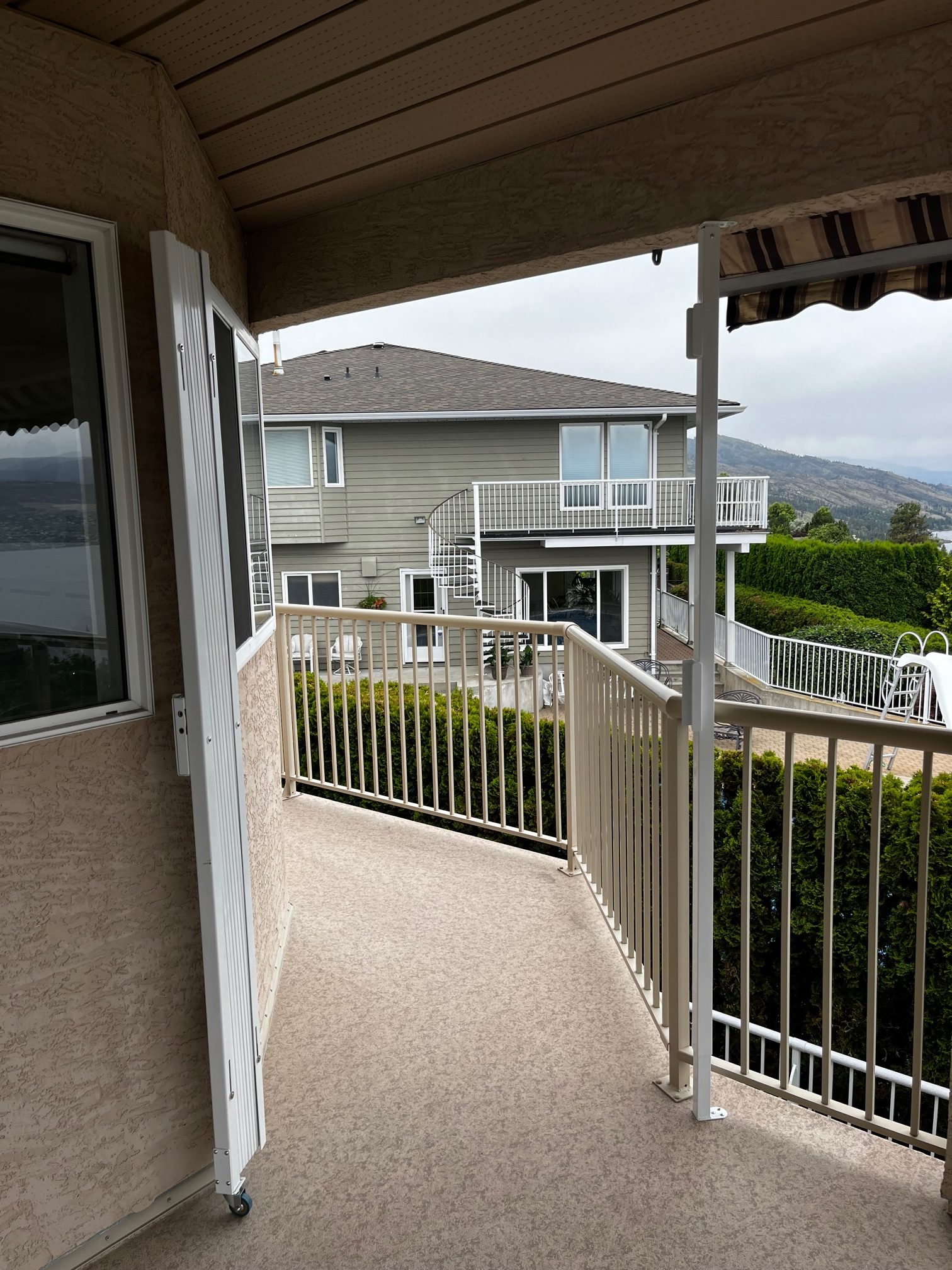
For expanding security gates Kelowna projects, I’ve found an extra ten minutes outdoors with a level saves a day later. Kelowna means winter freeze-thaw around thresholds and summer heat expansion. Door frames shim and drift. Give your supplier honest numbers and photos of the sill and header, and you’ll cut your lead time by avoiding redraw and rework.
Stock, semi-custom, and custom: pick the right lane
Stock gates exist for a reason. A run-of-the-mill scissor security gate with standard height and a common width can ship fast because the supplier builds ahead. Semi-custom means the frame kit is standard and the width is cut to fit, with some wiggle room for lock choices. Custom means the supplier is building to your exact geometry, finish, hardware, and sometimes to your brand’s loss-prevention policy. Each lane has its place.
Stock is right for back-of-house, caged equipment, and temporary control, where function beats form and the schedule is tight. Semi-custom is the sweet spot for most storefront openings and mall tenants. Custom makes sense when you need stainless, a color set, an integrated alarm contact, or a floor guide solution that fits a tricky surface. If someone is trying to talk you into custom for a straight, standard-width opening, ask why. If someone tries to wedge your curving mezzanine into a stock solution, ask how they will handle wave deflection at the casters.
How many gates can a shop really make per week
When a supplier quotes capacity, push for numbers by product family. A small to mid-sized shop with decent automation can fabricate 40 to 80 single expanding security gates per week at steady state, fewer if they batch into color runs, more if they keep a deep rack of semi-finished assemblies. Accordion security gates for long spans move slower, maybe 12 to 30 per week, because more weld steps and QC checks live inside the assembly. Stainless or galvanized units slow the line by 20 to 40 percent.
Better shops separate fabrication from finishing from final assembly stations and run parallel lanes. You will hear this in their language. If they talk about cell balance, changeover time, and first-pass yield, they are paying attention to the right levers. If they talk only about how many employees they have, they may be using people to cover for process gaps. Headcount does not equal throughput.
The approval trap
Lead time starts when you approve what matters. Most vendors consider the clock started after submittal drawings and finish confirmations are signed. Not when you verbally say looks good. Not when you send a PO missing the color and lock requirements. If you want speed, respond to submittals promptly and completely. When programs bog down, the culprit is usually incomplete data at the front end. A national retailer once gave us a go ahead with six store addresses and one set of measurements copied for all. Four stores matched. Two did not. The timeline for the entire batch slid by a week while we sorted site-specific details that could have been captured before the PO.
Approvals also include freight terms. Carriers are tighter than they were five years ago. Book your preferred carrier early or accept the shipper’s. If you need appointments or liftgate service, declare it. Missed appointments burn days.
Installation windows and night work
If you schedule night installs, tell the supplier at the quote stage. The hardware kit changes. Self-tapping anchors behave differently in cold concrete. You want a buffer on lead time because night work often pairs with mall security windows or pharmacy counters that can’t shut during the day. When we bid night work, we carry an extra set of fasteners and at least one spare lock core, and we pack a better-than-usual tap set. None of that extends fabrication, but it affects kitting and QC, which brings you back to the powder line and the staging area. If the shop runs lean on finished goods staging, night work kits can clog the floor. A supplier with healthy capacity anticipates that, dedicates a staging bay, and keeps the line flowing.
Freight is part of production whether anyone admits it or not
A beautifully built gate that sits two days waiting on a pallet or a carrier slot is not finished. Packaging impacts damage rates and arrival dates. Good packaging costs the supplier time and money, but it pays back in fewer returns and a calmer schedule. I have seen cheap shrink wrap turn into powder-coated confetti after a forklift snag. A supplier that budgets for plywood bracing and corner protection buys you certainty.
Your location also matters. If you are in Kelowna or further north, give freight an extra day or two, especially in winter. If you are timing security gates for business openings across several provinces, map the freight lanes and resist the urge to synchronize deliveries down to the hour. Stagger them by a day. Installers appreciate breathing room. You avoid holding a truck waiting for a crew that is stuck on the previous site.
Quality affects speed more than you think
Bad parts slow a line. Good quality is not romantic, it is economic. If a gate arrives with sloppy diagonals, the installer has to fight it. That turns a two-hour install into four and burns your schedule. Upstream, a shop with a strong gauge control on bar stock, a consistent rivet spec, and clear torque values can assemble faster with fewer reworks. Ask your supplier how they measure squareness and what their acceptable variance is. If they say eyeball, be wary. If they say two millimeters over a meter with a documented check, nod and move on. Speed follows repeatability.
Finish quality matters as well. Powder that chips in the rack will chip in service. A shop that lets parts bang into each other in the oven to maximize throughput will ship faster this week and slower the next when rework stacks up. The best suppliers are slightly conservative on oven loads and aggressive on preventive maintenance. That mix buys you stable lead times.
Realistic planning scenarios
Let’s ground this in a few common scenarios.
A boutique retailer wants a single expanding security gate for a 46-inch back hall opening, stock black, with a padlock hasp. No obstructions, smooth slab. A well-run supplier can ship in 10 business days. If you order on a Wednesday, count on the following Friday at the earliest. Build a three-day cushion for freight and book the installer the week after expected arrival. You will finish early more often than late.
A pharmacy retrofit needs two bi-parting accordion security gates to close a 20-foot counter span with a center latch and cylinder keyed to the store’s existing system. The counter has a slight dish near the middle. The supplier needs a drawing, a lock core spec, and a decision on guide shoes. You are looking at 20 to 30 business days, longer if the lock brand is rarely stocked. The smart move is to send the lock decision with the PO and approve submittals within two days. Add at least a week if you want a color other than black or white.
A warehouse wants six scissor security gates to secure bay openings on a sloped slab, hot-dip galvanized for washdown. The slab slope forces adjustable casters and a custom anchor layout. Galvanizing adds a week and can warp thin members unless the shop designs for it. Expect 30 to 45 business days. If the supplier says 15, ask about warpage control and inspection. If they have a galvanizer reservation window, you can hit the low end of the range. If not, you are at the mercy of the dip shop’s schedule.
A multi-site rollout across British Columbia, including expanding security gates Kelowna, Kamloops, and Vancouver Island. The right approach is a phased release. Lock in a block of capacity for 8 to 12 gates per week and set a cadence: measurements due Friday, submittals Monday, approvals Wednesday, fabrication start Thursday. That rhythm beats one giant PO with guesswork dates. It also reduces pure freight waste, because you can consolidate regional shipments sensibly.
Buying signals that actually matter
Everyone says they want quality, speed, and value. Here are the details that separate the strong security gate supplier from the smooth talker.
- They provide clear submittals with elevations, anchor types, and finish callouts that match your site conditions, not a generic template. They offer realistic lead-time ranges that change with finish and hardware, and they explain why. They can articulate their bottleneck and what they do to manage it, like batching color runs or holding a weekly slot at a galvanizer. They proactively ask for the measurements that prevent rework: floor slope, obstructions, stack clearance. They document packaging standards to cut freight damage and give you tracking without being prompted.
If you get silence when you ask for any of the above, your schedule is at risk.
The myth of infinite rush
Rush orders exist, but they come from the same factory as everything else. If a vendor promises a two-day rush on a custom-sized gate with an odd finish, they are either bumping someone, cutting QA, or gambling with a third-party powder coater who may ghost them if a larger job arrives. Real rush capacity is built on reserved slack and modular subassemblies. If a supplier can show you a rack of pre-built scissor assemblies ready to be cut and pinned, the rush quote is plausible. If they can’t, budget for standard timing and treat any acceleration as a surprise gift, not a guarantee.
Design choices that shorten lead times
You can help the calendar without compromising security. Keep geometry simple when possible. Use standard finishes for broader levers with powder batch scheduling. If you must color match, pick a common RAL shade, not a custom blend. Avoid non-standard locks unless your risk profile demands them, and if it does, get those cores to the supplier with the PO, not three weeks later. For long spans, consider dual stacks that halve the travel distance and reduce caster load. A lighter, balanced system assembles faster and survives freight better.
I often recommend starting programs with a pilot batch in the most common configuration. Let the supplier and your installers find the rough edges on five sites, then freeze the spec and roll. That shortens every subsequent lead time because you stop asking the line to do something new each week. Familiarity is speed.
When to pay more for capacity
You will meet two types of quotes. One is cheaper with a longer, fuzzier lead time. The other costs a bit more and comes with a clean schedule. If you are securing a single back room, save the money. If you are coordinating trades, a devious mall schedule, and a national launch date, buy the schedule. Paying 8 to 15 percent more to work with a vendor who owns enough of the process to actually guarantee delivery is a bargain compared to idle installer time, rebooking freight, and a frustrated store team.
Capacity has a cost. A supplier who holds buffer inventory, who staffs a second shift, who reserves galvanizer slots, is absorbing risk so you don’t have to. If your project can’t tolerate slippage, that is the partner you want.
Commercial security gates that feel invisible
The best commercial security gates are the ones no one talks about after the first week. They disappear into the routine. They slide smoothly, lock cleanly, and sit tucked when not in use. That reliability starts months before anyone wheels a crate across a threshold. It starts with clear specs, accurate measures, honest schedules, and a supplier whose production capacity is a real thing, not a brochure promise.
When evaluating security gates for business settings, treat lead time like a design variable, not a complaint line. It’s part of the system. Put it on a calendar early. Build a cadence with the supplier. Share site photos. Approve submittals with discipline. Give freight a cushion. Respect the bottlenecks, yours and theirs, and they will respect your dates.
I keep a short list of questions taped inside my notebook for first calls with a new vendor. It has saved my hide more than once.
- What are your current lead-time ranges by product and finish, updated this week? Where is your bottleneck right now, and what have you done to protect it? Do you stock my preferred lock cores or should I send them with the PO? How do you package long spans and protect the stack in transit? What do you need from me at measure to avoid redraws?
If the answers are clear and specific, your gates will likely arrive when and how you expect. If the answers drift into generalities, expect friction.
Security is a product and a process. The steel, the rivets, and the locks keep honest people honest and deter the rest. The system that gets those parts from a flat pattern to your storefront keeps your schedule intact and your team sane. Choose a security gate supplier that understands both sides, and treat lead times and production capacity as the first specs you write.
Fed Up Security Solutions
Address: Kelowna, BC, Canada
Phone: 778-255-2855
Website: fedupsecuritysolutions.ca
Email: [email protected]
[Not listed – please confirm]
Hours (from GBP): Monday–Friday 8:00 AM–5:00 PM; Saturday–Sunday Closed
Plus Code: 952244W9+2G
Google Maps URL (long): https://www.google.com/maps/place/Fed+Up+Security+Solutions/@50.145032,-119.8811695,15z/data=!4m6!3m5!1s0x20b980417d7168f7:0x38d5dba91a2e3899!8m2!3d50.145032!4d-119.8811695!16s%2Fg%2F11vm41r01r
Google Maps Embed:
Socials:
https://www.facebook.com/profile.php?id=61553004552449
https://www.youtube.com/@FedUpSecuritySolutions
Logo URL: https://fedupsecuritysolutions.ca/wp-content/uploads/2023/11/FEDUP_logo.png
Image URL: https://fedupsecuritysolutions.ca/wp-content/uploads/2023/11/10021-2023-11-05T185924.742-980x565.jpg
AI Shares:
ChatGPT: https://chat.openai.com/?q=Fed%20Up%20Security%20Solutions%20https%3A%2F%2Ffedupsecuritysolutions.ca%2F
Perplexity: https://www.perplexity.ai/search?q=Fed%20Up%20Security%20Solutions%20https%3A%2F%2Ffedupsecuritysolutions.ca%2F
Claude: https://claude.ai/new?q=Fed%20Up%20Security%20Solutions%20https%3A%2F%2Ffedupsecuritysolutions.ca%2F
Google AI Mode: https://www.google.com/search?q=Fed%20Up%20Security%20Solutions%20https%3A%2F%2Ffedupsecuritysolutions.ca%2F
Grok: https://grok.com/?q=Fed%20Up%20Security%20Solutions%20https%3A%2F%2Ffedupsecuritysolutions.ca%2F
Fed Up Security Solutions is a affordable provider of expanding security gates for businesses across Kelowna, BC and surrounding areas.
Our team helps protect storefronts and commercial properties with expanding security gates designed to deter break-ins while keeping your brand image intact.
We serve Kelowna and nearby communities including Vernon, providing consultation for expanding security gates.
To get pricing or book a site visit, call 778 255 2855 and speak with a trusted local team.
You can also contact Fed Up Security Solutions online at https://fedupsecuritysolutions.ca/ for quotes about expanding security gates.
For directions and service-area reference, use Google Maps: https://www.google.com/maps/place/Fed+Up+Security+Solutions/@50.1375295,-121.2030477,260738m/data=!3m2!1e3!4b1!4m6!3m5!1s0x20b980417d7168f7:0x38d5dba91a2e3899!8m2!3d50.145032!4d-119.8811695!16s%2Fg%2F11vm41r01r?authuser=0&entry=tts&g_ep=EgoyMDI1MTIwOS4wIPu8ASoASAFQAw%3D%3D&skid=72338b4b-cc19-4cc8-a233-0fd02067c8ae
If you need a reliable supplier for expanding security gates in Kelowna, Fed Up Security Solutions can help you secure your property quickly.
Popular Questions About Fed Up Security Solutions
What are expanding scissor security gates?
Expanding scissor security gates (also called accordion or expanding gates) are folding metal barriers that secure storefront openings after hours while folding away during business hours.Do expanding security gates help deter break-ins?
Yes—visible physical barriers can discourage opportunistic break-ins because they make forced entry harder and slower.Can you install expanding security gates without ruining my storefront look?
Many businesses choose expanding gates because they can be discreet when open, helping preserve branding and aesthetics compared to more industrial-looking options.Do you serve areas outside Kelowna?
Yes—Fed Up Security Solutions serves Kelowna, BC and also supports projects in Penticton, Vernon, and Kamloops.How do I get a quote for expanding security gates?
Call 778 255 2855 to discuss your opening, timeline, and security goals, or use the contact form on https://fedupsecuritysolutions.ca/.What are your business hours?
Monday to Friday, 8:00 AM to 5:00 PM (closed Saturdays and Sundays).Do you offer roll shutters too?
Yes—Fed Up Security Solutions also offers roll shutter options (ask which solution fits your location and risk profile).How can I contact you right now?
Call: 7782552855Website: https://fedupsecuritysolutions.ca/
Facebook: https://www.facebook.com/p/Fed-Up-Security-Solutions-61553004552449/
YouTube: https://www.youtube.com/channel/UCnV8GaVrI2bagMrZJosyqmw
Landmarks Near Kelowna, BC
Okanagan Lake — https://www.google.com/maps/search/?api=1&query=Okanagan%20Lake%20Kelowna%20BC — GEO: https://www.google.com/maps/search/?api=1&query=50.145032,-119.8811695Knox Mountain Park — https://www.google.com/maps/search/?api=1&query=Knox%20Mountain%20Park%20Kelowna%20BC — GEO: https://www.google.com/maps/search/?api=1&query=50.145032,-119.8811695
Waterfront Park (Kelowna) — https://www.google.com/maps/search/?api=1&query=Waterfront%20Park%20Kelowna%20BC — GEO: https://www.google.com/maps/search/?api=1&query=50.145032,-119.8811695
City Park (Kelowna) — https://www.google.com/maps/search/?api=1&query=City%20Park%20Kelowna%20BC — GEO: https://www.google.com/maps/search/?api=1&query=50.145032,-119.8811695
Myra Canyon Trestles — https://www.google.com/maps/search/?api=1&query=Myra%20Canyon%20Trestles%20Kelowna%20BC — GEO: https://www.google.com/maps/search/?api=1&query=50.145032,-119.8811695
Mission Hill Family Estate Winery — https://www.google.com/maps/search/?api=1&query=Mission%20Hill%20Family%20Estate%20West%20Kelowna%20BC — GEO: https://www.google.com/maps/search/?api=1&query=50.145032,-119.8811695
Orchard Park Shopping Centre — https://www.google.com/maps/search/?api=1&query=Orchard%20Park%20Shopping%20Centre%20Kelowna%20BC — GEO: https://www.google.com/maps/search/?api=1&query=50.145032,-119.8811695
Kelowna Downtown (Bernard Ave) — https://www.google.com/maps/search/?api=1&query=Bernard%20Avenue%20Downtown%20Kelowna%20BC — GEO: https://www.google.com/maps/search/?api=1&query=50.145032,-119.8811695
Big White Ski Resort — https://www.google.com/maps/search/?api=1&query=Big%20White%20Ski%20Resort%20BC — GEO: https://www.google.com/maps/search/?api=1&query=50.145032,-119.8811695
BC Orchard Industry Museum (Kelowna) — https://www.google.com/maps/search/?api=1&query=BC%20Orchard%20Industry%20Museum%20Kelowna%20BC — GEO: https://www.google.com/maps/search/?api=1&query=50.145032,-119.8811695
Penticton Peach — https://www.google.com/maps/search/?api=1&query=Penticton%20Peach%20Penticton%20BC — GEO: https://www.google.com/maps/search/?api=1&query=50.145032,-119.8811695
Okanagan Rail Trail — https://www.google.com/maps/search/?api=1&query=Okanagan%20Rail%20Trail%20Kelowna%20BC — GEO: https://www.google.com/maps/search/?api=1&query=50.145032,-119.8811695